What would you do if your strong, hardworking father suddenly couldn’t lift his cup of tea? Or if your vibrant sister’s speech became slurred at a family gathering? In that moment, your ability to recognise what’s happening could save their life.
Globally, one in four adults over the age of 25 years will experience a stroke in their lifetime.[1] Stroke is the second leading cause of death worldwide and a major cause of adult disability.[2] Yet, a widespread belief that it’s an ‘old person’s disease’ leaves younger people dangerously vulnerable. The truth is; it can happen to anyone, at any time.
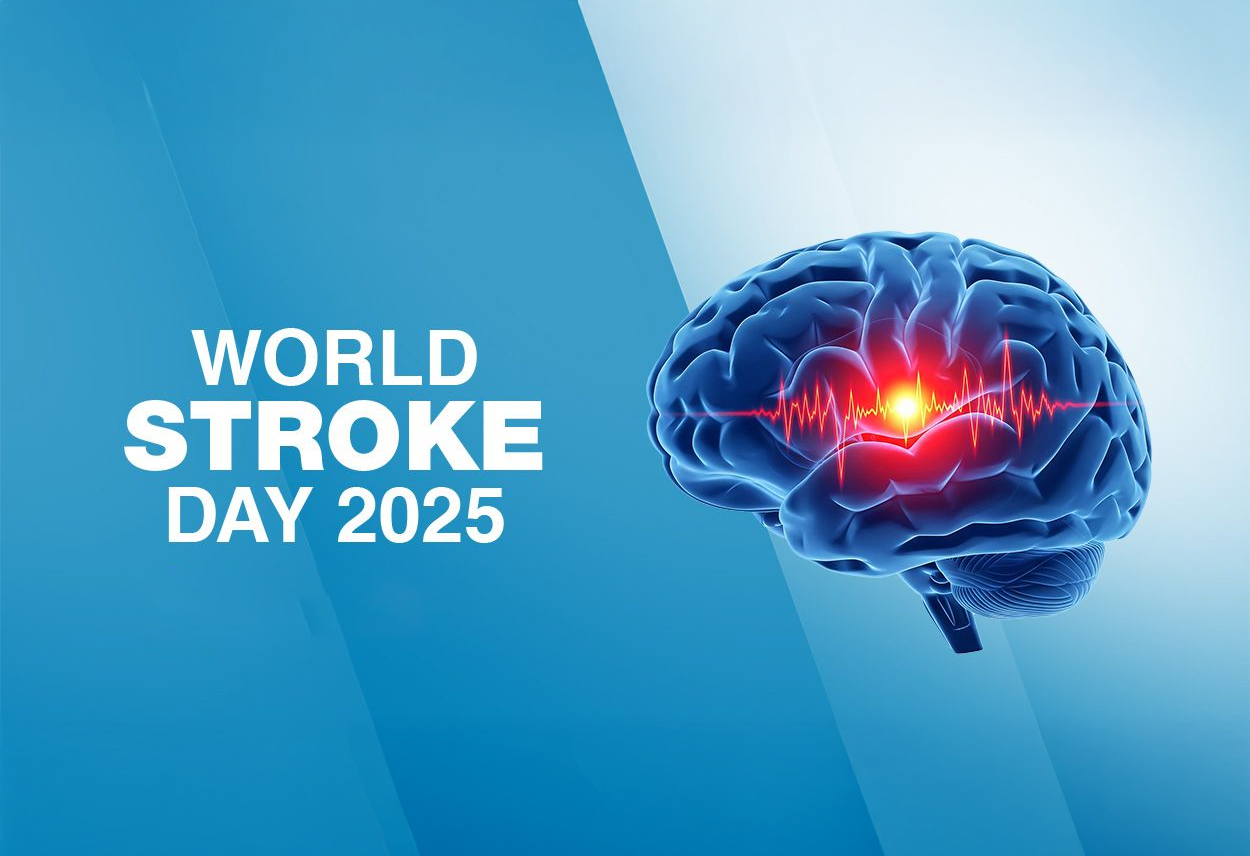
Every year on October 29th, World Stroke Day reminds us of this reality. This year’s, theme “Every Minute Counts,” emphasises the urgent action needed to combat stroke.
What is a Stroke?
A stroke is essentially a “brain attack.” It occurs when a blood clot blocks or bleeding disrupts the blood flow to the brain, causing brain cells to die. The functions controlled by the affected area of the brain—like speech, movement, and memory—are immediately at risk.
If treatment is delayed, brain damage grows. That is why timely response matters so much; Time is everything.
Know the Signs. Act F.A.S.T.
Your ability to Act F.A.S.T. is the single most important factor in minimizing brain damage. Remember this acronym:
- F – Face Drooping: Is one side of their face numb or drooping?
- A – Arm Weakness: Is one arm weak or numb?
- S – Speech Difficulty: Is their speech slurred or strange?
- T – Time to Call Emergency Services: If you see any of these signs, call for an ambulance immediately.
Every minute counts. Remember Time lost is Brain lost.
You Have the Power to Prevent a Stroke
Up to 80% of strokes can be prevented[3], and high blood pressure is the single biggest risk factor for stroke.[4]
You can lower the risk of getting a stroke by:
- Regularly checking your blood pressure, blood sugar, body mass index (BMI), waist circumference and cholesterol levels – and keeping them in healthy ranges
- Eating a balanced, low-sodium diet.
- Exercising regularly and staying active to maintain a healthy weight.
- Quitting smoking.
- Avoid excess alcohol consumption
- Talking to your doctor about your personal risk factors.
This World Stroke Day, don’t just be a bystander. Be a lifesaver. Learn the F.A.S.T. signs. Know the signs. Act F.A.S.T.!
[1] https://www.world-stroke.org/
[2] https://www.who.int/news-room/fact-sheets/detail/the-top-10-causes-of-death
[3] https://www.thelancet.com/journals/laneur/article/PIIS1474-4422(24)00369-7/fulltext
[4] https://www.stroke.org/en/about-stroke/stroke-risk-factors/high-blood-pressure-and-stroke